Product Overview
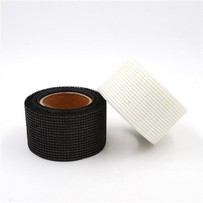
Fiberglass brick crack repair tape is a self-adhesive fiberglass mesh tape used to reinforce localized cracks in brick walls, masonry, plaster, and cement-based surfaces before applying repair compound, mortar, or finishing material.
The tape combines an open fiberglass mesh structure with an adhesive coating. Once applied across a prepared crack, the mesh provides reinforcement within the repair layer and helps distribute localized stress over a wider area.
It is supplied in roll form and can be produced in different mesh weights, widths, lengths, and packaging configurations for construction-material distributors, repair-product brands, and bulk buyers.
Why Use Fiberglass Mesh Tape for Brick Cracks?
Brick and masonry surfaces frequently develop localized cracks due to substrate movement, thermal shrinkage, structural settlement, or material transition differences.
Simply filling a crack with compound or mortar rarely provides sufficient tensile strength across the fracture line. Incorporating a fiberglass mesh tape creates a continuous reinforcing layer that bridges the repaired zone.
The tape is utilized to:
- Bridge localized surface cracks on brickwork and masonry
- Reinforce repaired brick and masonry joint areas
- Reduce stress concentration around repaired cracks
- Reinforce plaster and cement-based repair layers
- Provide a dimensionally stable mesh structure beneath finishing coats
- Streamline localized crack-repair operations on site
Note: This tape functions as a surface and repair-layer reinforcement component. It does not replace structural crack assessment, foundation stabilization, or the repair of underlying movement and structural defects.
Key Technical Specifications
|
Parameter |
Typical / Available Specification |
|
Base Material |
Fiberglass mesh |
|
Glass Type |
E-glass |
|
Weave Pattern |
Plain woven |
|
Mesh Weight |
Approx. 65–75 g/m² (custom weights available) |
|
Mesh Opening |
Customized according to application requirements |
|
Tensile Strength |
Approx. 200–300 N/25 mm (varies by specification) |
|
Resin / Coating Content |
Approx. 12–18% (configured for application stability) |
|
Adhesive Type |
Acrylic-based pressure-sensitive adhesive |
|
Standard Width |
50 mm |
|
Standard Length |
50 m / 90 m |
|
Roll Format |
Continuous roll on paper core |
|
Packaging |
Polybag, heat-shrink film, export carton, or customized packaging |
|
OEM Support |
Available for custom specifications and private labeling |
Fiberglass Mesh Construction & Manufacturing Process
The reinforcement performance of the tape depends directly on the quality of the fiberglass yarn, mesh geometry, and coating formulation.
The manufacturing process follows strict operational steps:
Yarn Preparation: Selection and inspection of high-strength E-glass roving and yarn.
Warping: Winding yarn onto warping beams to maintain uniform tension.
Weaving: Plain weaving of warp and weft yarns to form an evenly spaced mesh grid.
Coating Application: Passing the woven mesh through an acrylic resin coating bath to ensure alkali resistance and dimensional stability.
Drying and Curing: Thermal treatment in controlled ovens to cure the coating.
Adhesive Application: Applying pressure-sensitive adhesive to one side for self-adhesive functionality.
Slitting: Cutting the wide fabric master rolls into specified commercial widths.
Winding & Inspection: Winding onto paper cores under controlled tension, followed by visual and mechanical inspection.
Consistent yarn distribution and resin coverage are essential to maintain uniform tensile performance and alkali resistance across the entire roll.
Adhesive and Coating Performance
The adhesive layer determines how securely the tape remains positioned during installation before the repair compound is applied.
For crack-repair applications, the tape delivers:
- Consistent surface adhesion on porous and mineral substrates
- Sufficient initial tack for rapid positioning without curling
- Uniform adhesive distribution across the mesh width
- Stable bonding behavior during subsequent compound application
- Compatibility with standard acrylic, gypsum, and cement-based repair materials
Acrylic-based adhesive formulations can be adjusted based on target climate conditions, application methods, and specific substrate requirements.
Application: Brick and Masonry Crack Repair
Recommended Installation Sequence
Prepare the Substrate: Remove dust, loose particles, deteriorated mortar, oil, and contaminants surrounding the crack. The surface must be clean and dry.
Open the Crack: Clean out the crack where necessary and remove loose material. Assess the underlying cause and severity of the crack before cosmetic repair.
Apply the Repair Tape: Center the fiberglass tape directly over the crack and press it firmly onto the prepared surface. Ensure the tape extends sufficiently beyond both edges of the fracture.
Apply Repair Compound or Mortar: Apply the compatible repair compound or mortar over the tape, working the material thoroughly through the mesh openings. The fiberglass mesh must be fully embedded within the repair layer rather than left exposed on the surface.
Level the Surface: Allow the repair material to cure according to the compound manufacturer's instructions. Apply additional finishing material if required and sand smooth after curing.
Apply Final Finish: Prepare the repaired section for primer, paint, render, or other compatible finishing systems.
Suitable Applications
Brick Wall Crack Repair: Applied across localized cracks in brickwork and exterior/interior masonry surfaces prior to patching.
Masonry Surface Reinforcement: Utilized for localized reinforcement where an embedded mesh layer is required beneath cementitious or plaster-based repair coats.
Plaster Crack Repair: Used to bridge and reinforce movement cracks appearing in plaster and mineral wall finishes.
Cement-Based Surface Repair: Integrated into compatible repair mortars on concrete and cementitious substrates.
Wall Renovation: Deployed in building maintenance projects where localized cracks, joints, or patched zones require added surface stability.
OEM and Private Label Options
Custom Roll Dimensions: Tailored widths, lengths, and core diameters.
Mesh Customization: Variable weight, tensile strength, and color options (white, yellow, blue, etc.).
Adhesive Tuning: Adjusted tack levels for specific temperature or substrate conditions.
Custom Packaging: Printed inner cores, customized labels, branded shrink film, and bespoke master carton layouts.
Customized manufacturing programs require a signed technical specification sheet and pre-production sample approval prior to full-scale batch production.
Quality Control Points
Rigorous internal quality control ensures consistent field performance and reliable shipment standards. Key inspection checkpoints include:
Raw Material Inspection: Verification of E-glass yarn integrity and sizing agents.
Weaving Uniformity: Checking for broken filaments, missing warp/weft yarns, and consistent grid spacing.
Coating Consistency: Verifying resin pickup percentage and complete encapsulation of glass fibers.
Physical Testing: Measuring roll width, length, mesh weight per square meter, and tensile breaking strength.
Adhesion Testing: Verifying tack performance and unwind tension.
Winding & Visual Check: Inspecting edge neatness, core alignment, and freedom from telescoping.
Packaging Integrity: Ensuring moisture protection and carton durability for international transit.
Packaging and Bulk Supply
Individual Protection: Each roll is wrapped individually in a protective polybag or heat-shrink film to prevent moisture absorption and edge damage during transport.
Master Cartons: Packed into sturdy export-grade corrugated cartons designed to withstand long-distance maritime shipping.
Palletization: Cartons are stacked securely on export-compliant wooden or plastic pallets, strapped, and stretch-wrapped for containerized transport.
Logistics Optimization: Roll dimensions and carton sizes are engineered to maximize container loading efficiency and reduce shipping costs.
FAQ
Q: Can fiberglass brick crack repair tape be used on exterior brick walls?
A: Yes. It is suitable for exterior surface repair applications provided that the fiberglass mesh, adhesive, and exterior-grade repair mortar or render are fully compatible with local exposure and weathering conditions.
Q: Is the tape self-adhesive?
A: Yes. Pressure-sensitive self-adhesive backing is applied to facilitate fast, secure positioning directly over the prepared crack before applying mortar.
Q: What width is normally used for crack repair?
A: A width of 50 mm is the standard specification for most localized crack repairs, though narrower or wider rolls can be produced to order.
Q: What roll lengths are available?
A: Standard production lengths include 50 meters and 90 meters, with custom roll lengths available for specific commercial or retail packaging needs.
Q: What type of glass fiber is used in the tape?
A: The mesh is manufactured using high-grade E-glass yarn, known for its excellent tensile strength, dimensional stability, and chemical compatibility.
Q: What mesh weight should I select for my market?
A: Lugar weights around 65–75 g/m² are commonly specified for standard light-to-medium wall repair applications. Heavier options can be manufactured depending on reinforcement requirements.
Q: Can the tape be used with cement-based repair mortars?
A: Yes, provided the mesh coating and adhesive system are chemically compatible with cementitious compounds.
Q: Do you support OEM and private-label manufacturing?
A: Yes. We offer complete private-label options, including customized roll sizes, core printing, custom labels, and bespoke carton packaging for distributors.
Q: Can I request a product sample before placing a bulk order?
A: Yes. Samples can be supplied for laboratory testing, adhesive evaluation, and application verification prior to confirming a production order.
Q: What information is required to request a formal quotation?
A: Please provide the required tape width, roll length, mesh weight, tensile strength requirement, packaging specifications, estimated order volume, and destination port.
Hot Tags: fiberglass brick crack repair tape, China, suppliers, manufacturers, factory, quotation, low price, for sale, free sample, Fiberglass Self Adhesive Tape Mesh, Mesh Tape For Mosaic, Mesh Tape For Wall, Plasterboard Fiberglass Joint Tape, Self Adhesive Fiberglass Mesh Drywall Tape, Self Sticking Daywall Tape