Product Overview
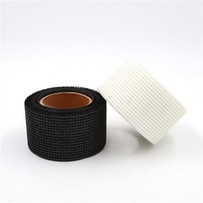
This fiberglass reinforcement mesh is intended for manufacturers and contractors using glass fiber reinforcement within bituminous waterproofing systems.
The basic structure consists of woven fiberglass yarns forming a regular open mesh. A suitable surface treatment or coating can be applied to improve yarn integrity, handling and compatibility with the intended application.
Unlike a waterproofing membrane itself, the fiberglass mesh functions as the reinforcement component. The bituminous material provides the waterproofing layer, while the glass fiber structure helps reinforce the composite system.
Technical Specifications
|
Parameter |
Available Options / Specification |
|
Base material |
Fiberglass yarn |
|
Glass type |
C-glass or E-glass, subject to specification |
|
Weave |
Open woven mesh |
|
Mesh opening |
Customized according to application |
|
Basis weight |
Customized according to reinforcement requirements |
|
Surface treatment |
Coated / treated according to end use |
|
Tensile strength |
Specified according to mesh construction |
|
Roll width |
Custom widths available |
|
Roll length |
Custom roll lengths available |
|
Core diameter |
Available according to production requirements |
|
Roll diameter |
According to roll length and mesh specification |
|
Color |
Usually supplied according to treatment/coating |
|
Packaging |
Export cartons, plastic wrapping or customized packaging |
|
Application |
Bituminous waterproofing, roofing and asphalt-based systems |
Typical Applications
Bituminous Waterproofing Membranes
Fiberglass mesh can be incorporated into waterproofing membrane structures as a reinforcement layer. The open mesh allows the surrounding bituminous compound to pass through the structure and form a bonded composite.
Roof Waterproofing
The mesh can be used in asphalt- and bitumen-based roof waterproofing systems where reinforcement is required to distribute stress and improve dimensional stability.
Liquid-Applied Bituminous Waterproofing
For liquid-applied systems, the mesh is embedded into the wet bituminous coating and covered by subsequent coating layers. Mesh opening and coating treatment should be selected according to the viscosity and application method of the waterproofing material.
Roof Repair and Local Reinforcement
Narrow-width rolls can be supplied for reinforcement of seams, transitions, joints, cracks and localized repair areas.
Damp-Proofing and Detail Reinforcement
Fiberglass reinforcement mesh can also be incorporated into selected asphalt-based damp-proofing and waterproofing details where a stable reinforcing fabric is required.
Why Use Fiberglass Mesh in Bituminous Waterproofing?
Fiberglass reinforcement is selected when the waterproofing system requires a stable reinforcement layer without introducing an organic textile into the composite.
The glass fiber structure provides:
- High tensile reinforcement relative to its weight
- Dimensional stability
- Regular reinforcement distribution
- Open structure for bitumen penetration
- Resistance to rot and biological degradation
- Consistent mesh geometry when properly woven and treated
The actual reinforcement performance depends on the yarn construction, mesh opening, basis weight, coating and the complete waterproofing system. For this reason, mesh selection should be based on the requirements of the membrane or coating rather than weight alone.
Surface Treatment and Bitumen Compatibility
A suitable coating helps maintain the integrity of the woven structure during handling and installation while allowing the reinforcement to become integrated into the bituminous layer.
The required treatment can vary depending on whether the mesh is used with:
- Hot-applied bitumen
- Cold-applied bituminous coatings
- Modified bitumen
- Bituminous mastics
- Liquid waterproofing compounds
- Factory-produced waterproofing membranes
For a new application, provide the bitumen type, application temperature and coating formulation where available. This allows the mesh treatment to be matched more appropriately to the intended system.
Important Production Controls
Yarn preparation: Fiberglass yarn is prepared according to the required mesh construction.
Weaving: Warp and weft yarns are woven into the specified mesh opening and fabric width.
Surface treatment: The woven mesh receives the specified coating or treatment.
Drying and curing: Controlled drying and curing stabilize the treatment and finished fabric.
Inspection: Finished mesh is checked for mesh opening, width, appearance and other agreed specifications.
Cutting and winding: The fabric is converted into the required roll width and length.
Export packaging: Rolls are packed according to the customer's handling, storage and shipping requirements.
Quality Control Points
For procurement, the most useful quality controls are measurable rather than descriptive.
Depending on the agreed specification, inspection can cover:
Mesh opening
Fabric width
Basis weight
Yarn integrity
Tensile strength
Coating condition
Coating uniformity
Roll length
Roll appearance
Edge condition
Moisture protection
Packaging condition
For repeat orders, the approved sample and technical specification can be used as the reference for subsequent production.
Packaging and Shipping
Roll packaging is selected according to roll dimensions, handling requirements and export transportation.
Typical considerations include:
Individual roll protection
Moisture-resistant outer packaging
Carton or pallet packing
Roll identification labels
Batch identification
Customized carton markings
Container loading efficiency
For regular import programs, packaging dimensions can be optimized together with roll width and length to improve container utilization.
FAQ
Q: What is fiberglass reinforcement mesh used for in bituminous waterproofing?
A: It is used as a reinforcing layer within bituminous waterproofing coatings or membranes to improve tensile reinforcement, dimensional stability and stress distribution.
Q: Is fiberglass mesh itself waterproof?
A: The fiberglass mesh is a reinforcement material, not the waterproofing layer itself. Waterproofing is provided by the surrounding bituminous compound or membrane system.
Q: Can fiberglass reinforcement mesh be used with modified bitumen?
A: Yes, fiberglass reinforcement can be used in modified bitumen systems, but the mesh construction and surface treatment should be selected according to the specific formulation and processing conditions.
Q: What mesh size should I use for bituminous waterproofing?
A: There is no single mesh size suitable for every waterproofing system. Mesh opening should be selected together with basis weight, tensile strength, bitumen viscosity and membrane thickness.
Q: Can you produce custom-width fiberglass reinforcement mesh?
A: Yes. Width, roll length and other construction parameters can be specified for different production and application requirements.
Q: What information is needed for a quotation?
A: Mesh opening, GSM, roll width, roll length and estimated quantity are the minimum useful specifications. Bitumen type and application method are also recommended when compatibility needs to be evaluated.
Q: Can you provide samples before bulk production?
A: Sample availability and specification should be confirmed according to the requested mesh construction and application.
Q: Can the packaging be customized?
A: Yes. Roll identification, carton markings, labels and other packaging requirements can be discussed according to the order and destination market.
Hot Tags: fiberglass reinforcement mesh for bituminous waterproofing, China, suppliers, manufacturers, factory, quotation, low price, for sale, free sample, ETFS Wall Mesh, External Wall Mesh, Fiberglass Mesh Net, Fiberglass Roll Mesh, Fiberglass Wall Meshes, Wall Insulation Mesh